This article was written by Kristy Blankers and Delma Kennedy. Introduction After a normal lactation (NL), extended lactation (EL) goats start a second lactation curve during the production period at about 330 days when milk yield begins to increase again. Figure 1 compares the lactation curves of goats in normal and extended lactations over a two-year period. Figure 1; Lactation curves in goats in extended lactation compared to the lactation curves of goats in two subsequent normal lactations (Douhard et al., 2013). Differences between the normal and extended lactation curves include: Weight Change Goats maintain their weight when they aren’t bred and start to gain weight after 330 days when milk yield begins to rise as shown in figure 2.…
All posts in Goats
Body Condition Scoring (BCS) Study
This article was written by Kristy Blankers and Delma Kennedy. Introduction This summer, a benchmarking project was undertaken to determine how goats can be efficiently body condition scored and to collect industry information on typical body condition scores in different stages of lactation. In December 2023, a questionnaire was sent out through the Dairy Goat Digest to collect information on how body condition scoring is used in the industry and the need for additional resources on body condition scoring goats. The results of the survey and summer project are outlined below. Survey Results Thank you to those who took the time to complete the survey! There were 33 producers who responded to the survey. Of the respondents 51.5% were milking less…
State of the Ontario Goat Industry
This article was written by Kristy Blankers and Delma Kennedy. Introduction The Canadian goat industry has continued to grow over the past decade, particularly in Ontario. The dairy industry has seen an increase in the volume of milk produced. The meat industry has had an increase in animals sold in live auctions and the number of goats slaughtered. While prices have fluctuated over the years, prices for the first half of 2024 indicate that there will be an increase in average goat meat price this year. Inventory Goat inventory data is only collected through the Canadian census. The last census was conducted in 2021. With 58% of the total goats in Canada, Ontario has the largest share of the goat…

Fall Rest Period for Alfalfa
Key Points When is the fall rest period? The fall rest period (sometimes called “critical fall harvest period”) for alfalfa is 450 growing degree days, base 5°C — or approximately 6-weeks — before the average date of the first killing frost (-4°C for several hours), when alfalfa stops growing. Not cutting during this period allows alfalfa plants to grow and build up sufficient root reserves to survive the winter and grow more aggressively in the spring. When cut early in the period, the alfalfa will use the existing root reserves for regrowth, “emptying the tank.” Later in the period, the alfalfa uses photosynthesis to produce carbohydrates and stores them as root reserves, “refilling the tank.” Cutting in the middle of…
Preventing and Extinguishing Hay Fires
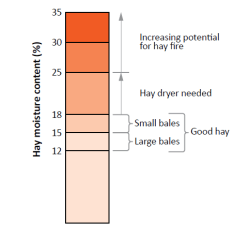
Key Points: What Causes Fires? The process of forage heating up and then burning is typically called spontaneous combustion. Spontaneous combustion for hay usually occurs within the first two months of storage. Unusual growing conditions, such as an early harvest window or immature crop, can complicate the drying process and increase the risk of fire. Spontaneous heating and combustion occur when sufficient moisture (above 25% and below 45% moisture content for forages), oxygen (air) and organic matter are present together to support the growth of bacteria and moulds. This growth results in an initial temperature peak of 54°C–65°C. When the forage reaches this temperature range, a chemical process called the Maillard Reaction may occur, causing additional heat generation. This reaction…

Potato Leafhopper in Alfalfa
This article was originally written by Joel Bagg in 2012. It was edited June 27, 2023 by Christine O’Reilly to reflect current insecticide options to control potato leafhopper and the cessation of third-party alfalfa variety trials in Ontario. Potato leafhopper (PLH) is the most damaging alfalfa insect pest in Ontario in most years. While the damage created is not as dramatic as an alfalfa weevil or armyworm outbreak, leafhopper damage is more chronic and widespread. Many farmers are unaware of the significance of PLH damage, which is often blamed on the hot, dry weather that frequently accompanies it. PLH damage is common across southern Ontario. The Niagara area and counties north of Lake Erie are particularly affected and extensive damage…
Silo Gas
This article was posted to FieldCropNews.com by Joel Bagg (retired OMAFRA Forage Specialist) on September 9, 2012. It was updated on May 31, 2024 by Christine O’Reilly to fix broken links to external resources. Farmers exposed to silo gas (nitrogen dioxide, NO2) are at risk of severe respiratory distress, permanent damage to lungs, and even sudden death. It is difficult to predict when silo gas will be produced, so always take precautions following harvest. Weather conditions and agronomic practices affect the amount of nitrates in plant material, which set the stage for the production of NO2 in the silo. For example, a dry period during the growing season followed by abundant rainfall will encourage a corn crop to take up high levels of…
Alfalfa Weevil
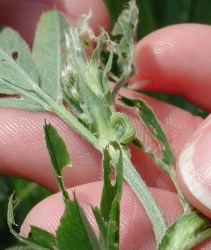
This article was originally written by Joel Bagg in 2013. It was edited May 1st, 2023 by Christine O’Reilly to reflect current insecticide options to control alfalfa weevil. Alfalfa weevil can be an issue in Ontario, particularly in south-western parts of the province. While outbreaks tend to be isolated, they can be severe and dramatically reduce forage yield and quality. Typically, alfalfa weevil do not reach significant levels until we are ready to take first-cut. However, sometimes alfalfa weevil larvae development is advanced relative to the alfalfa crop, and can do significant damage before the crop is ready to cut. Control options are to cut early or spray. Insecticides are recommended only when cutting is impractical, such as when the…

Webinar Library Now Live!
The webinar library is now live on the blog. Check out some previous webinars that focused on goat genetics, goat nutrition, udder health and milk quality.
Managing Metabolic Challenges in Dairy Ewes During Lambing
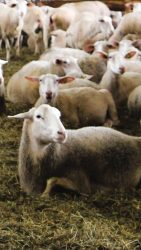
The transition period can bring many challenges to ewes. The transition period is the weeks leading up to and after lambing. The ewe is transitioning from a non-lactating, pregnant state to a lactating, non-pregnant state. Metabolic challenges can arise in the last 3-6 weeks of gestation before lambing and last into early lactation. What is Ketosis? The term ketosis is derived from ketone bodies, produced when the body breaks down stored fat for energy, also known as lipid mobilization. In ewes, this occurs during increased energy requirements in late pregnancy and early lactation. A negative energy balance occurs when energy consumed does not meet the current physiological energy demand. In a less technical phrase, there needs to be more groceries…