
The transition period can bring many challenges to ewes. The transition period is the weeks leading up to and after lambing. The ewe is transitioning from a non-lactating, pregnant state to a lactating, non-pregnant state. Metabolic challenges can arise in the last 3-6 weeks of gestation before lambing and last into early lactation.
What is Ketosis?
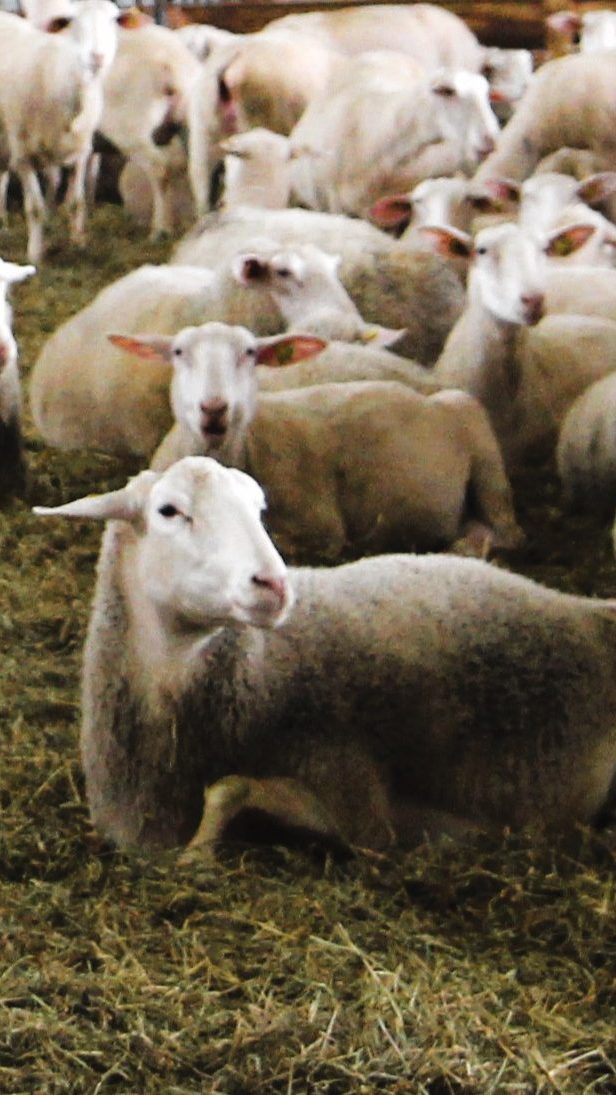
The term ketosis is derived from ketone bodies, produced when the body breaks down stored fat for energy, also known as lipid mobilization. In ewes, this occurs during increased energy requirements in late pregnancy and early lactation. A negative energy balance occurs when energy consumed does not meet the current physiological energy demand. In a less technical phrase, there needs to be more groceries to fuel the body. There are numerous risk factors for ketosis, including carrying multiple fetuses, being under-conditioned, being over-conditioned, improper nutrition, diseases like Johne’s disease, and stress. High milk production can also be a risk factor for dairy ewes.
Additionally, dry matter intake typically decreases in the weeks leading up to lambing with decreased rumen capacity. Dry matter intake is crucial for meeting energy demands. One study showed that decreased dry matter intake around lambing continued into early lactation for ewes lambing for the first time compared to mature Sarda ewes (Cabiddu et al., 2020). This decrease in dry matter intake around this time can pose a risk for ketosis, especially in ewes that carry multiple lambs.
Ketosis can exist in clinical and subclinical states. Testing ketone body concentrations in circulation can help determine whether a ewe is experiencing ketosis. Beta-hydroxybutyrate (BHBA), a ketone body, is commonly used to monitor the magnitude of lipid mobilization. BHBA can be detected in the blood and urine of ewes
Ketosis Testing
Early detection is vital for successful treatment of ketosis. Laboratory testing is the gold standard for determining BHBA concentrations but is not always convenient for animal-side care. For small ruminants, most energy demand occurs in late gestation, so testing during this period would be best. Luckily, there have been several studies that tested handheld devices for determining ketosis in ewes. For ewes, a blood BHBA concentration of 0.86-1.60mmol/L is moderate (subclinical) ketosis, and ≥1.60mmol/L is severe (clinical) ketosis.
Subclinical ketosis is more common than clinical ketosis. Subclinical ketosis can impact milk production in early lactation, potentially setting ewes back for the rest of their lactation. In addition to milk production, milk fatty acid profiles can differ between low BHBA (average 0.63 mmol/L) and high BHBA ewes (average of 1.35mmol/L) with increased concentrations of 9 saturated fatty acids and 24 unsaturated fatty acids (Fiore et al., 2021). Changes in fatty acid profiles can impact overall milk quality; perhaps a discussion for another blog post.
On-farm Testing

A study performed in Prince Edward Island tested the Precision Xtra meter for the detection of BHBA in blood samples from 384 ewes from 34 commercial flocks. The researchers randomly sampled eight ewes from lambing groups. The Precision Xtra meter is a device used for human diabetic care and is readily available. There was high agreement between Precision Xtra and laboratory testing, making it suitable for in-barn testing. The researchers did note that there was a 0.2mmol/L difference between the laboratory test and the Precision Xtra meter, so ranges of 0.6-1.0mmol/L can be inconclusive and suggest 1.0mmol/L be used with the Precision Xtra meter for ketosis detection. In this study, 29% of lambing groups had at least one ewe classified as ketotic (Ratanapob et al., 2018). The photo is a Precision Xtra with a test strip inserted courtesy of Abuelo & Alves-Nores, 2016
There is more work needed to understand how common subclinical ketosis is in dairy sheep herds in Ontario. Work with nutritionists and veterinarians to devise a plan for preventing and treating ketosis. Monitoring ewe body condition scores, identifying ewes with multiple lambs, recording disease, and implementing a BHBA testing protocol will help control this metabolic condition.
Sources used in this blog post: Sources: Cabiddu A., et al. (2020) Journal of Dairy Science 103(9):P8564 ; Fiore E. et al. (2021) Animals. 11:1371.; Ratanapob et al., (2018) J. Vet. Diagnostic Investigation. 31(1):17-22.
**This article was originally published in Ontario Sheep News Magazine