Preventing and Extinguishing Hay Fires

Preventing and Extinguishing Hay Fires

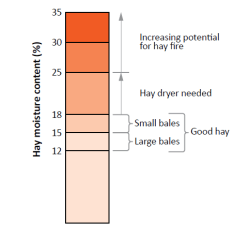
Key Points: What Causes Fires? The process of forage heating up and then burning is typically called spontaneous combustion. Spontaneous combustion for hay usually occurs within the first two months of storage. Unusual growing conditions, such as an early harvest window or immature crop, can complicate the drying process and increase the risk of fire. Spontaneous heating and combustion occur when sufficient moisture (above 25% and below 45% moisture content for forages), oxygen (air) and organic matter are present together to support the growth of bacteria and moulds. This growth results in an initial temperature peak of 54°C–65°C. When the forage reaches this temperature range, a chemical process called the Maillard Reaction may occur, causing additional heat generation. This reaction…


Silo Gas

This article was posted to FieldCropNews.com by Joel Bagg (retired OMAFRA Forage Specialist) on September 9, 2012. It was updated on May 31, 2024 by Christine O’Reilly to fix broken links to external resources. Farmers exposed to silo gas (nitrogen dioxide, NO2) are at risk of severe respiratory distress, permanent damage to lungs, and even sudden death.  It is difficult to predict when silo gas will be produced, so always take precautions following harvest. Weather conditions and agronomic practices affect the amount of nitrates in plant material, which set the stage for the production of NO2 in the silo. For example, a dry period during the growing season followed by abundant rainfall will encourage a corn crop to take up high levels of…

From the Backside to the Countryside – Manure Odours

From the Backside to the Countryside – Manure Odours

This article was written by Christine Brown, OMAFRA Field Crops Sustainability Specialist. It was originally posted on FieldCropNews.com. There is no surer sign of spring in the countryside than the evidence from our noses of manure application in full swing. Odour complaints occur every year, especially where urban settlements border livestock farms. Although manure odour is inconvenient, most farms do consider wind direction and make an effort to apply and incorporate manure as quickly as possible to minimize odours. Some farms are also looking at manure additives to help control odours. The combination of livestock species, feed ration and manure storages result in hundreds of complex compounds that can produce odorous gases. Some of these gases are dangerous, while others…

Do you have a parasite strategy for this grazing season?

Anthelmintic resistance is an important consideration for every parasite strategy.  It is important to monitor and treat animals selectively.  That means only treat those animals who need it most.  To slow or prevent antimicrobial resistance at least 30% of the animals must not be treated.  More information on parasites and the 5 Star Worm Program can be found in the Handbook for the Control of Internal Parasites of Sheep and Goats developed by Canadian researchers and extension personnel.

Would Your Barn Get a Checkmark? Barn Fire Safety Checklist

Take time to check how safe your barn is.  The National Fire Protection Association has information related to fire, electrical and related hazards. National Fire Prevention Association Click on the image to make it larger.

The Ontario Office of the Fire Marshal and Emergency Management estimates that barn fires cost Ontario farmers more than $25 million per year (2012-2014 average)

Do you know what to do in the event of a farm emergency? Do you know what to do if you have deadstock to manage? Barn fires, natural disasters, equipment failures and diseases are devastating events for farmers, their families and workers, and the neighbouring community. Planning ahead to reduce risks, and preventing accidents with a safe operation will help to protect employees, family members and animals. Emergency events can cause substantial loss to a farm operation and create unique challenges for farmers, including disposing of large volumes of deadstock. The Ontario Ministry of Agriculture, Food and Rural Affairs (OMAFRA) has a regulation that gives you options for deadstock management. These options help to protect water quality, reduce environmental impacts…