Frost seeding is a popular way to renovate an existing forage stand and is most effective in fields where patches of bare soil at least the size of a loonie are visible. With spring around the corner, many producers have questions about how to best use this technique to improve their hay fields and pastures. When can I frost seed forages? The optimum time to frost seed is when the snow has melted, but the ground is still frozen. Waiting until there is bare soil prevents the seed from being washed away with melt water. Frozen ground can support the weight of equipment and prevent ruts and compaction. Often the ideal window for frost seeding is very short, and sometimes…
All posts in Forage

Frost Injury in Sorghum Species
Caution! Members of the sorghum family – sorghum, sudangrass, and hybrid sorghum-sudangrass – contain dhurrin, a glucoside that breaks down to release hydrocyanic acid, also known as prussic acid (hydrogen cyanide, HCN). A sudden disruption of growth such as frost, drought or cutting, causes prussic acid to be released inside the plant at a more rapid rate. High prussic acid levels may be lethal to ruminants; death often occurs within 20 minutes of ingesting sorghum forage with elevated prussic acid concentrations. Early fall, between the first frost and the first killing frost, is the riskiest time of year for prussic acid production in sorghum species. These warm-season grasses are very frost-sensitive. It is impossible to know by looking at them…
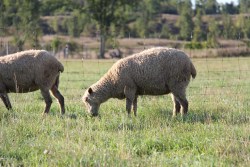
Managing Forage Crops and Pastures in Hot and Dry Conditions
This list details actions Ontario farmers could take to increase feed inventory before, during, and after prolonged hot and dry conditions.

Coping with Hail Damage to Forage Crops and Pastures
This list details actions Ontario farmers could take to minimize the impacts of hail damage after a storm.
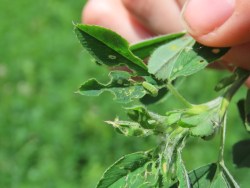
How do I manage alfalfa weevil?
Alfalfa weevil is a major alfalfa pest in Ontario. Larvae feeding on alfalfa leaves can reduce both yield and forage quality. The simple answer As alfalfa gets taller it can tolerate more weevils before action is necessary to protect forage yield and quality. Action thresholds for managing alfalfa weevil are as follows: Stem Height Number of larvae per stem Up to 30 cm (12 in.) More than 1 Up to 40 cm (16 in.) 2 or more Any height More than 3 A little more information Alfalfa weevil larvae begin feeding in mid- to late-May, beginning with the leaf buds. The larvae then move to leaves near the stem tips, where damage starts off as pinholes (Figure 1) and progresses…

Fall Rest Period for Alfalfa
Key Points When is the fall rest period? The fall rest period (sometimes called “critical fall harvest period”) for alfalfa is 450 growing degree days, base 5°C — or approximately 6-weeks — before the average date of the first killing frost (-4°C for several hours), when alfalfa stops growing. Not cutting during this period allows alfalfa plants to grow and build up sufficient root reserves to survive the winter and grow more aggressively in the spring. When cut early in the period, the alfalfa will use the existing root reserves for regrowth, “emptying the tank.” Later in the period, the alfalfa uses photosynthesis to produce carbohydrates and stores them as root reserves, “refilling the tank.” Cutting in the middle of…
Preventing and Extinguishing Hay Fires
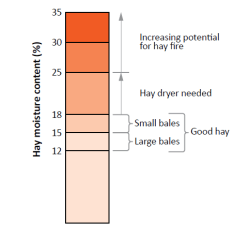
Key Points: What Causes Fires? The process of forage heating up and then burning is typically called spontaneous combustion. Spontaneous combustion for hay usually occurs within the first two months of storage. Unusual growing conditions, such as an early harvest window or immature crop, can complicate the drying process and increase the risk of fire. Spontaneous heating and combustion occur when sufficient moisture (above 25% and below 45% moisture content for forages), oxygen (air) and organic matter are present together to support the growth of bacteria and moulds. This growth results in an initial temperature peak of 54°C–65°C. When the forage reaches this temperature range, a chemical process called the Maillard Reaction may occur, causing additional heat generation. This reaction…

Potato Leafhopper in Alfalfa
This article was originally written by Joel Bagg in 2012. It was edited June 27, 2023 by Christine O’Reilly to reflect current insecticide options to control potato leafhopper and the cessation of third-party alfalfa variety trials in Ontario. Potato leafhopper (PLH) is the most damaging alfalfa insect pest in Ontario in most years. While the damage created is not as dramatic as an alfalfa weevil or armyworm outbreak, leafhopper damage is more chronic and widespread. Many farmers are unaware of the significance of PLH damage, which is often blamed on the hot, dry weather that frequently accompanies it. PLH damage is common across southern Ontario. The Niagara area and counties north of Lake Erie are particularly affected and extensive damage…
Silo Gas
This article was posted to FieldCropNews.com by Joel Bagg (retired OMAFRA Forage Specialist) on September 9, 2012. It was updated on May 31, 2024 by Christine O’Reilly to fix broken links to external resources. Farmers exposed to silo gas (nitrogen dioxide, NO2) are at risk of severe respiratory distress, permanent damage to lungs, and even sudden death. It is difficult to predict when silo gas will be produced, so always take precautions following harvest. Weather conditions and agronomic practices affect the amount of nitrates in plant material, which set the stage for the production of NO2 in the silo. For example, a dry period during the growing season followed by abundant rainfall will encourage a corn crop to take up high levels of…
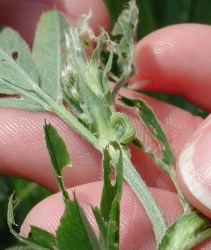
Alfalfa Weevil
This article was originally written by Joel Bagg in 2013. It was edited May 1st, 2023 by Christine O’Reilly to reflect current insecticide options to control alfalfa weevil. Alfalfa weevil can be an issue in Ontario, particularly in south-western parts of the province. While outbreaks tend to be isolated, they can be severe and dramatically reduce forage yield and quality. Typically, alfalfa weevil do not reach significant levels until we are ready to take first-cut. However, sometimes alfalfa weevil larvae development is advanced relative to the alfalfa crop, and can do significant damage before the crop is ready to cut. Control options are to cut early or spray. Insecticides are recommended only when cutting is impractical, such as when the…