Introduction Artificially rearing lambs and kids is costly and labour intensive. Investing in a machine to help reduce the labour costs associated with feeding is something to consider. There are various types of milk replacer machines on the market. Which type of machine is best suited for an operation depends on the size of operation, current infrastructure and budgets. This article aims to introduce three types of milk replacer machines. Automatic Milk Machine (e.g. Grober/Forester Technik) Automatic milk machines continuously mix small portions of milk replacer for ad libitum milk feeding. A common machine in Ontario is sold by Grober in partnership with Forester Technik. This machine allows for portions to be set and counted and has various features to…
All posts in 2025
Milk House Matters
This article was written by Peter Maw and originally published in the August 2018 issue of the Dairy Goat Digest. Introduction Your milk house is the first impression visitors get of your farm. A clean and tidy milk house is important for safely storing a quality product and allowing your Bulk Tank Milk Grader (BTMG) to properly grade, sample and pump milk to the transport tank. Hose Port Hose Ports must be kept clean and smooth to prevent damage to hoses. The outer flap that covers the port needs to be self-closing and tight-fitting to keep pests out. Concrete or clean crushed stone should be laid on the ground under the hose port and the area kept free of all…
Milk Sampling Strategies
This article was written by Mike Foran and originally published in the August 2018 issue of the Dairy Goat Digest. Troubleshooting a high Bactoscan result can be one of the most frustrating issues a dairy goat producer encounters. A complete evaluation of milking equipment and bulk tank, and a review of the sanitation program is recommended. Often producers and equipment dealers will make minor or even significant upgrades to the milking system, yet high bulk tank Bactoscan results persist. In these cases, producers should consider that one or more goats are shedding high numbers of bacteria and may be the root cause of the high Bactoscan results. Can one goat with high bacteria milk in a large herd spike the…

State of the Ontario Sheep Industry Fall 2025
Original article written by Christopher Llewellyn and Delma Kennedy and updated by Kristy Blankers and Delma Kennedy. Highlights Market Demand Inventory Trends Market Prices Lamb Supply Slaughter and Trade Wool Market Demand Domestic Protein Demand In Canada, the average annual consumption of various animal proteins reveals distinct dietary preferences. Figure 1 shows that poultry leads with poultry at 40.79kg per person, followed by beef at 16.77 kg and pork at 15.63 kg. Eggs also contribute significantly to the diet, with an average consumption of 21.73 dozen. Lamb and mutton, however, account for a small share, averaging just 1.09 kg per person per year. Comparing this to the previous year, when lamb and mutton consumption was 0.94 kg, there has been an…
Quality Goat Milk-Why Does it Matter?
This article was written by Mike Foran and originally published in the August 2018 issue of the Dairy Goat Digest. Various studies indicate that poor raw milk quality can have a detrimental effect on finished dairy products. Very high levels of somatic cells, bacteria, or both, can lead to increased enzyme levels in pasteurized milk, which negatively impacts finished product quality (e.g. flavour) and shortens the shelf life. Enzymes include lipolytic enzymes, which break down milk fat and cause rancid flavours, and proteolytic enzymes, which break down milk proteins to cause bitter flavours. In particular, research suggests that using milk with very high bacterial and somatic cell counts (SCCs) can result in cheese defects and lower cheese yields. Milk with…

Frost Injury in Sorghum Species
Caution! Members of the sorghum family – sorghum, sudangrass, and hybrid sorghum-sudangrass – contain dhurrin, a glucoside that breaks down to release hydrocyanic acid, also known as prussic acid (hydrogen cyanide, HCN). A sudden disruption of growth such as frost, drought or cutting, causes prussic acid to be released inside the plant at a more rapid rate. High prussic acid levels may be lethal to ruminants; death often occurs within 20 minutes of ingesting sorghum forage with elevated prussic acid concentrations. Early fall, between the first frost and the first killing frost, is the riskiest time of year for prussic acid production in sorghum species. These warm-season grasses are very frost-sensitive. It is impossible to know by looking at them…

Influence of BCS and Weight on Sheep Performance
This article was written by Kristy Blankers and Delma Kennedy Introduction Animal efficiency is important to a livestock farm’s bottom line. Therefore, it is beneficial to select for animals that are able to wean more kilograms of lamb per kilogram of mature body weight. Animal performance is influenced by a ewe’s body condition score (BCS) and body weight. To effectively select animals that are more efficient, body weight and BCS must be taken into consideration. Over the past four years, BCS, body weight, and performance data has been collected on farm with the objective of being able to create a genetic evaluation model to select animals that can maximize production per kilogram of mature body weight. With three breeding seasons…
State of the Ontario Goat Industry
This article was written by Kristy Blankers and Delma Kennedy. Overview The goat industry has seen steady growth over the past decade, especially in Ontario. The dairy sector has seen a consistent increase in the volume of milk produced. The meat sector has had a gradual increase in animals sold in live auctions and number of animals slaughtered into 2023 and remained steady in 2024. Meat prices saw a significant increase in the first half of 2025 before returning to 2024 price levels in July. Inventory Goat inventory data is only collected through the Canadian census. The last census was conducted in 2021. With 58% of the total goats in Canada, Ontario has the largest share of the goat inventory.…

Scrapie Infosheet
This infosheet is by the Canadian Food Inspection Agency (CFIA) What is scrapie and why is surveillance important? Scrapie is a very rare, devastating disease that affects the central nervous system of goats and sheep. It is in the same class of diseases as bovine spongiform encephalopathy (BSE) in cattle and chronic wasting disease (CWD) in elk and deer. Like these diseases, once an animal is infected with scrapie, it is always fatal. Sheep and goats can get scrapie by either coming into direct contact with the saliva, urine, feces, blood or birthing fluids of an infected animal, or indirectly by ingesting anything from, living in or spending time in a contaminated environment like a barn or pasture. Males are…
Managing Forage Crops and Pastures in Hot and Dry Conditions
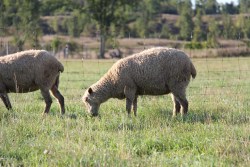
This list details actions Ontario farmers could take to increase feed inventory before, during, and after prolonged hot and dry conditions.