What is the workplace culture on your farm?

What is the workplace culture on your farm?

I recently read an article on farm labour shortage indicating that “the domestic labour pool is expected to drop largely due to an older-than-average workforce and few young entrants.”  I have also heard conversations like, young people don’t want to work, or they don’t know how to work.  Yet, I have also met some very motivated young people who are looking to start sheep farming and are finding the task of learning everything needed, financing an operation, etc. daunting.  This is not a new issue and is governed by a complex matrix of factors.  I would like to bring up one factor that I haven’t heard talked about often in the sheep industry and that is workplace culture. I know…
Forage Report – August 2019

Forage Report – August 2019

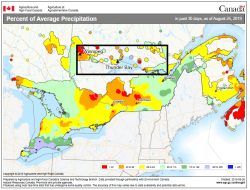
Save the date! Forage Focus 2019 will be held December 5th 9:30 am – 3:30 pm EST at the Stratford Rotary Complex. Registration will open soon. Ontario Forage Council is looking for remote location hosts to receive the live stream in northern and eastern Ontario. If interested in hosting, contact Patricia Ellingwood at 1-877-892-8663. The Ontario Hay Listings website is a free classifieds database for producers looking to buy or sell hay and straw. Southwestern According to AAFC, rainfall during August varied widely across the region. The counties on the north shore of Lake Erie, along with Lambton, Middlesex, Oxford, Brant, and Hamilton received 115% – 200% of average precipitation for the month. In these counties, dairy third cut and other second…

Raven Predation Producer Survey: Input Appreciated

Raven Predation Producer Survey: Input Appreciated

Allison Brown, Small Ruminant Livestock Assistant Currently a two-part Raven Predation Project is underway. This small study is being conducted by Jillian Craig, Small Ruminant Specialist and Allison Brown, Small Ruminant Livestock Assistant with the Ontario Ministry of Agriculture, Food and Rural Affairs. Part one involves coordinating a province-wide survey to collect information on the magnitude of raven predation on sheep and beef farms. We are looking to collect benchmark data, increase awareness and improve mitigation strategies through feedback from sheep and beef farmers. Part two includes trialing non-lethal raven deterrents on a few Ontario sheep farms to collect data on the effectiveness of the deterrent. Aggregate survey results will be published in industry magazines though OSF and BFO in…

Forage Report – July 2019

Forage Report – July 2019

The Ontario Hay Listings website is a free classifieds database for producers looking to buy or sell hay and straw. Southwestern According to AAFC, the northern tip of the Bruce Peninsula, as well as Essex, Chatham-Kent, Lambton, Middlesex, Elgin, Oxford, Norfolk, Brant, Haldimand, and Hamilton received average or above-average precipitation for the month of July. The rest of the region experienced below-average amounts of rainfall during the past month. Potato leafhopper has been found at threshold in Niagara. Since this pest is introduced on storm fronts blowing up from the southern U.S., it is usually widespread across large areas. Producers should scout fields every 5-7 days. Scouting information can be found on pages 341 and 342 of OMAFRA Pub. 811: Agronomy Guide…

Introduction to Small Ruminant Production Course

Introduction to Small Ruminant Production Course

Looking to Start Your Own Sheep or Goat Farm? OMAFRA (Ontario Ministry of Food and Agriculture) and OSF (Ontario Sheep Farmers) are hosting an introductory course on small ruminant production. This course will introduce potential producers to the wide range of knowledge that is needed to farm small ruminants. Topics covered in the course include: Overview of Both Sheep and Goat Industries Core Production Concepts Selecting Genetics Infrastructure, Handling, & Labour Reproduction/Production Methods Creating a Good Pasture & Combating This course is directed at potential producers who need basic information and the opportunity to tour a farm.. We encourage anyone interested in becoming a part of the industry to attend this course. If you would like to attend please use…

Forage Report – June 2019

Forage Report – June 2019

The Ontario Hay Listings website is a free classifieds database for producers looking to buy or sell hay and straw. Forage Expo (West) will be held July 9th at Pendora Dairy Ltd., 6447 County Road 164, Monkton (Perth County) from 10am-3pm. For more info see Ontario Forage Council’s website. **DATE CHANGE** Forage Expo (East) will be held July 23rd at Vosbrae Farms, 140 Skyline Road, Oakwood (Kawartha Lakes) from 10am-3pm. For more info see Ontario Forage Council’s website. Southwestern First cut began the first week of June. Reports indicate yields are average or below-average. According to AAFC, areas of Huron, Perth, Wellington, and Waterloo received 60-85% of average precipitation for June. Parts of Bruce, Grey, Essex, Chatham-Kent, Norfolk, Haldimand, and Niagara had 115-150% of average rainfall this…

Changes under the Nutrient Management Act are here!

Changes under the Nutrient Management Act are here!

By Matt Wilson, Nutrient Management Lead, Ontario Ministry of Agriculture, Food and Rural Affairs As of July 1, 2019, two important changes to the Nutrient Management regulation are in effect under the Nutrient Management Act. They will help farmers reduce regulatory burden in the agriculture sector while continuing to protect the environment. The most far-reaching change removes the automatic expiration of nutrient management strategies every five years. This requirement added burden without improving environmental protection. Nutrient management strategies can now remain in effect until there is a significant change to an operation, placing a greater emphasis on annual reviews. To support this change, OMAFRA is developing tools for producers to help them more easily complete their annual review and keep…

Forage Report – May 2019

Forage Report – May 2019

The Ontario Hay Listings website is a free classifieds database for producers looking to buy or sell hay and straw. Southwestern Estimates suggest at least 50% of fields have some level of winterkill. Cool conditions have slowed forage growth. First cut of dairy-quality hay usually begins on the Victoria Day weekend; however, less than 295 GDDs have accumulated outside Essex County. Alfalfa reaches early flower stage around 390 GDDs. According to AAFC, Huron, Perth, Wellington, south Grey, Dufferin, and Simcoe counties have experienced average precipitation for May. The rest of the region received above-average precipitation. Alfalfa weevil has been found in some fields. Producers should scout fields twice a week to monitor their development. Scouting information can be found on pages 339…

Establishing Alternative Forage Crops

Establishing Alternative Forage Crops

Reports indicate widespread alfalfa winterkill due to several thaws that reduced snow cover and created ice cover in fields. Producers need to scout their hay fields to assess the damage, then develop a plan to ensure they will have the forage they need. Keep it, patch it, or start over? Plant counts should be done in the spring and fall each year (Table 1). These can be done when the alfalfa is dormant. The spring count is a good time to dig up some plants and assess root health. Stem counts are useful for predicting yield potential, and these should be done when there is 15-20 cm (6-8 in.) of growth (Table 2). If the number of plants or stems…

Forage Report – April 2019

Forage Report – April 2019

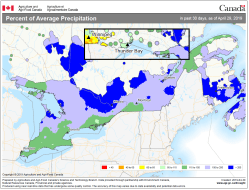
According to Agriculture and Agrifood Canada, April 2019 brought above-average precipitation to most of the province. Southwestern Despite several thaws, forages seem to have overwintered better than expected in most of the region. See Check Alfalfa Stands This Spring and Make a Plan for scouting information. There are some reports of alfalfa heaving. The freeze/thaw cycles can “jack” the plants out of the ground, drying out crowns or breaking taproots. Heaving is most likely to occur on heavy soils. Red clover acres may be down this year. Those still planning to plant clover into wheat should consider single-cut (or “mammoth”) varieties, as they are slower growing and therefore less aggressive than double-cut varieties. Central and Eastern Estimates suggest 60-80% of…