This article was written by Dr. Lisa Sharko (Lead Veterinarian Animal Health and Welfare, OMAFA). This article was originally published in the Spring 2026 issue of the Dairy Goat Digest. Introduction Caprine arthritis-encephalitis (CAE) virus is a Lentivirus that infects a goat’s white blood cells leading to caprine arthritis-encephalitis disease. The virus travels through the body inside infected white blood cells, where it is unable to replicate and stays inactive. During this time, the goat is infected, but the virus is almost impossible to detect via testing and the goat may look and act completely normal for a long time. The virus can remain inactive for months to years, allowing the virus to spread throughout the body like a “Trojan…
All posts in Health
A Step In The Right Direction: The Importance of Goat Hoof Trimming
This article was written by Dr. Lisa Sharko (Lead Veterinarian Animal Health and Welfare, OMAFA). This article was originally published in the Spring 2026 issue of the Dairy Goat Digest. Introduction Healthy hooves are fundamental to a dairy goat’s productivity, longevity and welfare. Goat hooves grow continuously and in most confined goat housing systems, there is nothing abrasive to wear hoof growth down. Hoof trimming then becomes an essential herd health management task that must be performed to prevent long hooves from negatively impacting your goats. Most goats require trimming 2-3 times a year. Hoof overgrowth and lameness have significant economic impacts on your herd. Unmaintained Hooves Lead to Lameness and Production Loss When a goat’s hooves overgrow or become…

The Basics of Pregnancy Toxemia (Ketosis)
This article was written by Kristy Blankers and Dr. Lisa Sharko. Introduction Pregnancy toxemia, also known as ketosis, is a metabolic disease in dairy goats that occurs during late pregnancy and is caused by an elevation in ketone bodies. Pregnancy toxemia most commonly develops one to three weeks before kidding. Late gestation is a period of high energy demand as the animal supports multiple fast-growing fetuses. If these energy demands exceed the goat’s intake, they enter a state of negative energy balance. Fat is mobilized from the doe’s fat stores and transported to the liver to be used as an energy source. The fat is broken down into ketones, which can be used as an alternative emergency energy source. However,…
Colostrum Quality Impacts on Kid Viability
This article was written by Marlene Paibomesai and originally published in the August 2018 issue of the Dairy Goat Digest. What is colostrum? Colostrum is the first secretion from an udder after birth. Colostrum is rich in nutrients and immune factors, such as immunoglobulins and immune cells that are important for immune and digestive system development (Sanchez-Macias et al., 2014). Colostrum is higher in protein, fat, growth hormones and immune factors than milk. Why do newborns need colostrum? Unlike other mammals, ruminants transfer limited amounts of immunoglobulins and other immune factors from the dam to the fetus during pregnancy. Instead, the majority of immune factors are transferred through colostrum to the goat kid after birth. This is called passive immunity.…

Scrapie Infosheet
This infosheet is by the Canadian Food Inspection Agency (CFIA) What is scrapie and why is surveillance important? Scrapie is a very rare, devastating disease that affects the central nervous system of goats and sheep. It is in the same class of diseases as bovine spongiform encephalopathy (BSE) in cattle and chronic wasting disease (CWD) in elk and deer. Like these diseases, once an animal is infected with scrapie, it is always fatal. Sheep and goats can get scrapie by either coming into direct contact with the saliva, urine, feces, blood or birthing fluids of an infected animal, or indirectly by ingesting anything from, living in or spending time in a contaminated environment like a barn or pasture. Males are…
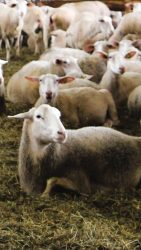
Managing Metabolic Challenges in Dairy Ewes During Lambing
The transition period can bring many challenges to ewes. The transition period is the weeks leading up to and after lambing. The ewe is transitioning from a non-lactating, pregnant state to a lactating, non-pregnant state. Metabolic challenges can arise in the last 3-6 weeks of gestation before lambing and last into early lactation. What is Ketosis? The term ketosis is derived from ketone bodies, produced when the body breaks down stored fat for energy, also known as lipid mobilization. In ewes, this occurs during increased energy requirements in late pregnancy and early lactation. A negative energy balance occurs when energy consumed does not meet the current physiological energy demand. In a less technical phrase, there needs to be more groceries…
Hoof Health in Small Ruminants
On August 17th and August 19th 2023, Ontario Goat hosted a hoof health clinic emphasizing the importance of hoof trimming and preventing hoof diseases in your goats. Featured speakers included Dr. Gosia Zoebel (New Zealand), Susan Schoenian (University of Maryland), Dr. Emily zur Linden (Metzger Veterinary), and Dr. Lauren Wilson (Cornwallis Veterinary Services). Inspired by the event, this blog post discusses the importance of hoof trimming and outlines hoof ailments that you may be concerned about in your sheep and goats. Hoof Trimming In intensive systems, like those in Ontario, animals are typically housed on soft surfaces that don’t allow for natural wearing of the hooves. Allowing hooves to overgrow and become deformed can cause permanent damage and increase susceptibility…

Blister Beetles
Description Blister beetles are very rare in Ontario but have been occasionally found in alfalfa fields north of Lake Erie. They are more common in arid climates, such as the U.S. Midwest, and are often associated with grasshopper infestations. The three most common species are the black blister beetle (Epicauta pensylvanica), the ash grey blister beetle (Epicauta fabricii) and the striped blister beetle (Epicauta vittata). Blister beetles have soft bodies 1–2.5 cm (3/8 –1 in.) long. The thorax between their head and abdomen is long and narrow, making it look like a neck. Their wings tend to be shorter than their abdomen. The black and ash-grey blister beetles are solidly coloured as their names describe (Figures 1 and 2). The…
Make Better Use of Your Feed; Sampling is What You Need! Part 1: Taking a Proper Feed Sample
Learn about proper procedures for collecting feed samples.
Clostridial Disease Outbreaks in Dairy Goats: Brought to you by the Ontario Animal Health Small Ruminant Network
Prevention tips and information from the Ontario Animal Health Small Ruminant Network about Clostridial Disease Outbreaks.