This article was written by Dr. Lisa Sharko. The California Mastitis Test (CMT) is a rapid, on-farm screening tool used to detect mastitis in lactating ruminants by estimating the number of somatic cells in the milk. It is a cost-effective test that can be performed quickly by producers, providing immediate results. The CMT can be used to evaluate individual animals or to screen larger production groups, such as fresh does. While the test is simple to perform, accurate interpretation requires training and experience. Producers are encouraged to work with their herd veterinarian to review testing techniques, develop a testing strategy, and establish response protocols based on test results. CMT kits are available through veterinary clinics and agricultural supply retailers that…
All posts in Health & Nutrition

Scrapie Infosheet
This infosheet is by the Canadian Food Inspection Agency (CFIA) What is scrapie and why is surveillance important? Scrapie is a very rare, devastating disease that affects the central nervous system of goats and sheep. It is in the same class of diseases as bovine spongiform encephalopathy (BSE) in cattle and chronic wasting disease (CWD) in elk and deer. Like these diseases, once an animal is infected with scrapie, it is always fatal. Sheep and goats can get scrapie by either coming into direct contact with the saliva, urine, feces, blood or birthing fluids of an infected animal, or indirectly by ingesting anything from, living in or spending time in a contaminated environment like a barn or pasture. Males are…

Coping with Hail Damage to Forage Crops and Pastures
This list details actions Ontario farmers could take to minimize the impacts of hail damage after a storm.
Hoof Health in Small Ruminants
On August 17th and August 19th 2023, Ontario Goat hosted a hoof health clinic emphasizing the importance of hoof trimming and preventing hoof diseases in your goats. Featured speakers included Dr. Gosia Zoebel (New Zealand), Susan Schoenian (University of Maryland), Dr. Emily zur Linden (Metzger Veterinary), and Dr. Lauren Wilson (Cornwallis Veterinary Services). Inspired by the event, this blog post discusses the importance of hoof trimming and outlines hoof ailments that you may be concerned about in your sheep and goats. Hoof Trimming In intensive systems, like those in Ontario, animals are typically housed on soft surfaces that don’t allow for natural wearing of the hooves. Allowing hooves to overgrow and become deformed can cause permanent damage and increase susceptibility…
Artificial Lamb Rearing: Part 2 – A Producer Project
From March to August 2022 an on-farm project examining artificial rearing systems specifically focused on milk machines and lamb performance was conducted on several Ontario farms. The project had three main objectives: lamb productivity, rearing cost, and producer labour. Six farms participated in the project. Two farms had Lac-Tek milk machines and four farms had Eco Feeders also commonly known as Förster-Technik and / or Grober. The results will be presented in a series of articles; this article will focus on producer labour. A previous article can be found in the December 2022 Ontario Sheep News for context as well as information on farm specific set-ups, machine cleaning and milk replacer cost. Producer Labour Labour was the most variable…
Artificial Lamb Rearing: Part 1 – A Producer Project
From March to August 2022 an on-farm project on artificial rearing systems specifically focusing on milk machines and lamb performance was conducted at several Ontario farms. The project had three main objectives: lamb productivity, rearing cost, and producer labour. The results will be presented in a series of articles; this article will focus on-farm set-ups, machine cleaning and milk replacer cost. Six farms participated in the project. Two farms had Lac-Tek milk machines and four farms had Eco Feeders also commonly known as Förster-Technik and / or Grober refer to Figure 1. The total number of ewes represented on the farms was 3395, with flock sizes of 400, 825, 120, 1000, 450 and 600 respectively. Two farms kept artificially…

Blister Beetles
Description Blister beetles are very rare in Ontario but have been occasionally found in alfalfa fields north of Lake Erie. They are more common in arid climates, such as the U.S. Midwest, and are often associated with grasshopper infestations. The three most common species are the black blister beetle (Epicauta pensylvanica), the ash grey blister beetle (Epicauta fabricii) and the striped blister beetle (Epicauta vittata). Blister beetles have soft bodies 1–2.5 cm (3/8 –1 in.) long. The thorax between their head and abdomen is long and narrow, making it look like a neck. Their wings tend to be shorter than their abdomen. The black and ash-grey blister beetles are solidly coloured as their names describe (Figures 1 and 2). The…
Make Better Use of Your Feed; Sampling is What You Need! Part 1: Taking a Proper Feed Sample
Learn about proper procedures for collecting feed samples.
Improving Lamb Survival
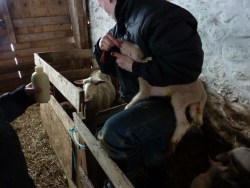
Improving lamb survival is an ongoing discussion. At the June 2019 small ruminant veterinary conference in Guelph, a predominant theme was “Improving Lamb and Kid Survival”. Lamb survival is often complex and farm specific but researchers from different parts of the world are working on issues and details that affect the survival of small ruminants that may provide ideas to improve lamb survival on your farm. Dr. Cathy Bauman, University of Guelph, talked about neonatal dairy small ruminant survival in intensive rearing conditions. Two important areas she discussed were record keeping and early life infections. Record Keeping To solve a complex problem, it is critical to keep ongoing records. Although it is difficult when many animals are being born at…
Managing Rams for a Successful Breeding Season
The ram is the most important member of the flock, yet he does not always get the attention he deserves. Good ram management can determine the success of your breeding program and ensure a profitable lamb crop. Sperm production in rams takes 49 days, therefore it is important to remember that you will not see the effects of any management changes for almost 7-8 weeks. You’ll want to ensure rams are well looked after in the two month period leading up to the breeding season as it will have a direct effect on the quality of sperm and fertility of the ram. Testicle size is a good indicator of a ram’s sperm producing ability, which can be assessed using scrotal circumference.…