This article was written by Mike Foran and originally published in the August 2018 issue of the Dairy Goat Digest.
Various studies indicate that poor raw milk quality can have a detrimental effect on finished dairy products. Very high levels of somatic cells, bacteria, or both, can lead to increased enzyme levels in pasteurized milk, which negatively impacts finished product quality (e.g. flavour) and shortens the shelf life. Enzymes include lipolytic enzymes, which break down milk fat and cause rancid flavours, and proteolytic enzymes, which break down milk proteins to cause bitter flavours. In particular, research suggests that using milk with very high bacterial and somatic cell counts (SCCs) can result in cheese defects and lower cheese yields. Milk with high bacterial counts may also interfere with starter culture activity in the cheese making process.
If bacterial counts are already high in raw milk at the time of processing, composition and flavour defects may already be present from microbial activity. In addition, although pasteurization will destroy pathogenic bacteria (disease-causing organisms) and reduce the overall bacterial load, spores of some spore forming bacteria (such as Bacillus spp. and Clostridium spp.) that are present in raw milk can survive pasteurization, and subsequently grow and cause further quality issues in finished products. In particular, some clostridia produce gas during their growth, which can cause late-blowing defects in cheese. Controlling these spore-forming bacteria is mainly done through proper sanitation.
One type of bacteria that contributes to enzymatic activity in milk before and after pasteurization are psychrotrophic bacteria, which are bacteria that grow at 7⁰ C or less. One notable dairy psychrotroph is Pseudomonas spp. Some enzymes produced by psychrotrophs are not inactivated by pasteurization or \ other heat treatments and thus may continue to degrade the finished product after the bacterium itself has been destroyed.
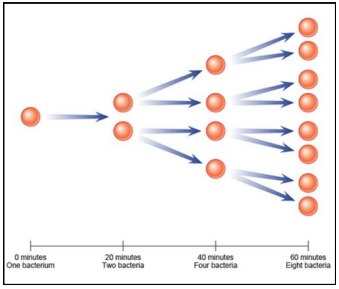
Controlling psychrotrophic bacterial begins with sanitation and cooling. If teats and/or milk contact surfaces are not clean, or milk cooling is slow or marginal, psychrotrophic bacteria may become the predominant organism in the bulk tank. There is very little growth of psychrotrophic bacteria at 2⁰ C or lower, so proper temperature control of raw milk in the bulk tank is extremely important. Bacterial growth is an exponential process that can occur as frequently as every 20 minutes.
If raw milk containing one single bacterial cell is left uncooled for only five hours, that one cell could reproduce to become over 16,000 bacterial cells during that timeframe. Thus, cooling is a key step in controlling bacterial growth.
The dairy goat industry is striving to increase milk sales. Competing against various beverages, cow milk yogurts and cheeses is not easy. However, continued production of high quality goat milk will help grow the industry and open new marketing opportunities.
Low BactoScan™ Results are Possible – Here’s How
If you start to see higher than normal bacterial levels in your raw milk test results, there are some critical control points that can be checked. Steps to take when you encounter poor milk quality:
- Check bulk tank milk temperature. Milk must be stored between 0 and 4°C – preferably closer
to 1-2°C (34 – 36ºF) - Ensure that milk is cooled quickly. The cooling unit should lower the milk temperature as close
as possible to 1ºC (34ºF) within one hour after milking. - Check water temperature at the start (74ºC (165ºF) or higher) and end (49ºC (120ºF) or higher)
of the chlorinated alkali wash cycle. - When dry, visually inspect the pipeline, milk hoses, inflations and any other milk contact surface for the presence of films which could indicate inadequate cleaning.
- Observe a complete wash cycle of the milking and cooling equipment. You may find that a
pump or valve is worn and not working properly, or that chemicals are not being dispensed as required. - Consult your equipment dealer and/or your OMAFA Raw Milk Specialist to discuss findings
and arrange for a quality assistance inspection.
Utilize the California Mastitis Test (CMT) or a strip cup to screen for udder health issues. Some
bulk tank quality issues have been traced back to a single infected goat.
For more information about keeping milk bacteria levels low, visit the following links:
https://www.ontario.ca/page/improving-milk-quality-udder-preparation-goats
Tip

Save money on teat dipping. Foaming teat dippers can reduce dripping and spillage of teat dip, reducing costs. Ask your supplier for details.
References:
Murphy, S. C., Martin, N. H., Barbano, D. M., & Wiedmann, M. (2016). Influence of raw milk quality on processed dairy products: How do raw milk quality test results relate to product quality and yield? Journal of Dairy Science, 99(12), 10128-190149, http://dx.doi.org/10.3168/jds.2016-11172
Goff, H. D., Hill, A. R., & Ferrer, M. A. Dairy Science and Technology eEbook. https://books.lib.uoguelph.ca/dairyscienceandtechnologyebook/part/dairy-microbiology/