Bonding Pens for a Doe and Her Kids

Bonding Pens for a Doe and Her Kids

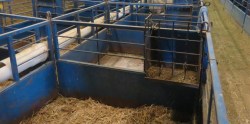
In preparation for kidding, setting up bonding pens (also referred to as claiming pens or kidding pens) a few weeks in advance is often a good idea so when does start to kid you are prepared and can focus on kidding and daily chores, instead of building pens. Claiming pens assist the doe in establishing a strong maternal bond with her kid(s).

Forage Report – August 2019

Forage Report – August 2019

Southwestern Central and Eastern Northeastern Northwestern

Forage Report – July 2019

Forage Report – July 2019

Southwestern Central and Eastern Northeastern Northwestern For more information about potato leafhopper and true armyworm, see: Are Insects Eating Your Forage Crop? Potato Leafhopper in Alfalfa Watch for Armyworm in Spring Cereals and Mixed Forages

Forage Report – June 2019

Forage Report – June 2019

Southwestern Central and Eastern Northeastern Northwestern

Changes under the Nutrient Management Act are here!

Changes under the Nutrient Management Act are here!

By Matt Wilson, Nutrient Management Lead, Ontario Ministry of Agriculture, Food and Rural Affairs As of July 1, 2019, two important changes to the Nutrient Management regulation are in effect under the Nutrient Management Act. They will help farmers reduce regulatory burden in the agriculture sector while continuing to protect the environment. The most far-reaching change removes the automatic expiration of nutrient management strategies every five years. This requirement added burden without improving environmental protection. Nutrient management strategies can now remain in effect until there is a significant change to an operation, placing a greater emphasis on annual reviews. To support this change, OMAFRA is developing tools for producers to help them more easily complete their annual review and keep…

Forage Report – May 2019

Forage Report – May 2019

Southwestern Central and Eastern Northeastern Northwestern

Establishing Alternative Forage Crops

Establishing Alternative Forage Crops

Reports indicate widespread alfalfa winterkill due to several thaws that reduced snow cover and created ice cover in fields. Producers need to scout their hay fields to assess the damage, then develop a plan to ensure they will have the forage they need. Keep it, patch it, or start over? Plant counts should be done in the spring and fall each year (Table 1). These can be done when the alfalfa is dormant. The spring count is a good time to dig up some plants and assess root health. Stem counts are useful for predicting yield potential, and these should be done when there is 15-20 cm (6-8 in.) of growth (Table 2). If the number of plants or stems…