Prevention tips and information from the Ontario Animal Health Small Ruminant Network about Clostridial Disease Outbreaks.
All posts in Goats
Planning and building a goat milk house
A neat, well-planned milk house plays a particularly important role in producing a high‑quality product and helps to maintain a credible image of the dairy industry. OMAFRA has written a new factsheet with information, recommendations and requirements to help with planning and building a goat milk house.
August 2020 Forage Report
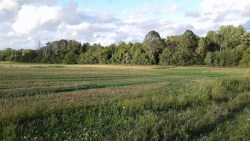
Photo: Many winter wheat fields were planted to an annual forage crop after harvest this year. Premiums for summer-seeded New Forage Seeding insurance are due to Agricorp September 15. Silage corn growers should check fields for rootworm resistance to Bt hybrids Scouting for corn rootworm injury in silage fields is important to detect potential resistance to rootworm Bt traits and to plan management options for the next growing season. It is especially important to report any fields showing signs of suspected resistance to your corn agronomist and the provincial entomologist. High Risk Fields for Resistance to Occur Include: Scouting Guidelines to Determine Possible Rootworm Resistance are available on Field Crop News. Scouting should occur in early September, before silage harvest. Rotating out…
Forage Options to Replace Silage Corn
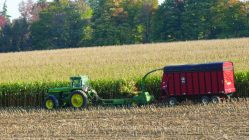
Key Points: Why replace silage corn? Some regions in Ontario have observed high corn rootworm pressure in 2020 that is challenging current Bt rootworm hybrids. In regions where Bt rootworm corn hybrids have been used for more than three consecutive years, resistance among corn rootworm populations is suspected. Several growers in Ontario are reporting fields with rootworm injury to trait providers and research and extension scientists. Growers in areas with resistant rootworm populations can no longer rely solely on Bt rootworm hybrids for protection against rootworm injury. Continued use of these hybrids in problem fields can perpetuate the issue, allowing resistant populations to survive and spread to neighbouring fields. Other control measures like granular insecticides or seed treatments can only…
Continuous Corn Growers Should Check Fields for Rootworm Resistance to Bt Hybrids
Reblogged from Field Crop News: Continuous corn growers should check fields for rootworm resistance to bt hybrids Canadian Corn Pest Coalition News Release: Corn rootworm (CRW) has historically been one of the most important pests of corn in Canada and can cause extreme economic loss and increased management costs. High CRW pressure in Ontario in 2020 is challenging current Bt corn rootworm hybrids and several growers of Bt rootworm hybrids are reporting unexpected injury by CRW to trait providers and research and extension scientists. Specifically, several fields in Huron, Perth and Durham Counties have been identified with injury to various Bt rootworm traits, providing an early warning of possible resistance development by CRW to some Bt traits. There is the…

June 2020 Forage Report
Southwestern Central and Eastern Northeastern Northwestern Agricorp Reminder of some upcoming deadlines: You can see the full list of Agricorp program deadlines.
Forage Report – April 2020
Winter Conditions Most of the province had average amounts of precipitation over the winter. Areas of Chatham-Kent, Lambton, Huron, Grey, Bruce, Temiskaming, Cochrane, Rainy River, and Kenora received below-average winter precipitation. Overall, reports of winterkill suggest normal or below-normal levels, except in Prescott & Russell, where high amounts of alfalfa winterkill occurred. Spring Conditions Planting intentions for forage acres are up compared to 2019, and most fields intended for cool-season forages across Southern, Western, Central, and Eastern Ontario have been planted. During the month of April, Southern, Western, and Northern Ontario had below-average precipitation. Central and Eastern Ontario, and Cochrane District received average amounts of precipitation. This has allowed field work to progress steadily in areas that are at lower…

Spring Scouting of Alfalfa
Good agronomy is very important for achieving good yield and quality in forage crops. While good agronomy includes a fertility plan, seeding techniques, and harvest management, it also relies on proactive decision-making. The only way to know what is happening in a field before it is too late is to scout. Taking regular walks through hay fields and observing them carefully is important throughout the growing season, however, there are some special things producers should assess when scouting in the early spring. At green-up When the crop has broken dormancy and is putting out new buds, it is time to do a plant count and root health assessment to determine how well the alfalfa overwintered. This first scouting is a…
Predation Prevention Tools for a Goat Herd
When faced with the on-going threat of predation to your herd some proactive steps can be implemented. It should be noted that even with the best prevention strategies in place, predation can and/or will still occur. When considering prevention practices, it is important to consider the level of predation (for example, the dollar value of loss), time of year, location, past history, cost of each predation prevention strategy, and the amount of protection offered. There are different options for predation prevention strategies with some being more effective than others. Options include, but are not limited to, fencing, livestock guardian animals, hunting, trapping, night time enclosures and deterrents (lights, radio, bells, etc.). It should be noted that night time enclosures…
Marketing Meat Goat Kids
When making the decision on where to market meat goat kids, a variety of options exist. It is important to keep in mind that the consumer is ultimately the person who will be purchasing the product. In the value chain found in Figure 1, the consumer is at the top of the diagram as they truly drive the system. With no end user, there would be no demand for the product. In the simplified Figure 1 diagram, this is only one example of how a value chain might work. There are different marketing methods depending on individual preferences. Marketing methods for meat goats include: With this list in mind, it is essential to weigh the advantages and disadvantages for…