This article was written by Mike Foran and originally published in the August 2018 issue of the Dairy Goat Digest. Various studies indicate that poor raw milk quality can have a detrimental effect on finished dairy products. Very high levels of somatic cells, bacteria, or both, can lead to increased enzyme levels in pasteurized milk, which negatively impacts finished product quality (e.g. flavour) and shortens the shelf life. Enzymes include lipolytic enzymes, which break down milk fat and cause rancid flavours, and proteolytic enzymes, which break down milk proteins to cause bitter flavours. In particular, research suggests that using milk with very high bacterial and somatic cell counts (SCCs) can result in cheese defects and lower cheese yields. Milk with…
All posts tagged Goats

Frost Injury in Sorghum Species
Caution! Members of the sorghum family – sorghum, sudangrass, and hybrid sorghum-sudangrass – contain dhurrin, a glucoside that breaks down to release hydrocyanic acid, also known as prussic acid (hydrogen cyanide, HCN). A sudden disruption of growth such as frost, drought or cutting, causes prussic acid to be released inside the plant at a more rapid rate. High prussic acid levels may be lethal to ruminants; death often occurs within 20 minutes of ingesting sorghum forage with elevated prussic acid concentrations. Early fall, between the first frost and the first killing frost, is the riskiest time of year for prussic acid production in sorghum species. These warm-season grasses are very frost-sensitive. It is impossible to know by looking at them…
State of the Ontario Goat Industry
This article was written by Kristy Blankers and Delma Kennedy. Overview The goat industry has seen steady growth over the past decade, especially in Ontario. The dairy sector has seen a consistent increase in the volume of milk produced. The meat sector has had a gradual increase in animals sold in live auctions and number of animals slaughtered into 2023 and remained steady in 2024. Meat prices saw a significant increase in the first half of 2025 before returning to 2024 price levels in July. Inventory Goat inventory data is only collected through the Canadian census. The last census was conducted in 2021. With 58% of the total goats in Canada, Ontario has the largest share of the goat inventory.…

Scrapie Infosheet
This infosheet is by the Canadian Food Inspection Agency (CFIA) What is scrapie and why is surveillance important? Scrapie is a very rare, devastating disease that affects the central nervous system of goats and sheep. It is in the same class of diseases as bovine spongiform encephalopathy (BSE) in cattle and chronic wasting disease (CWD) in elk and deer. Like these diseases, once an animal is infected with scrapie, it is always fatal. Sheep and goats can get scrapie by either coming into direct contact with the saliva, urine, feces, blood or birthing fluids of an infected animal, or indirectly by ingesting anything from, living in or spending time in a contaminated environment like a barn or pasture. Males are…
Body Condition Scoring (BCS) Study
This article was written by Kristy Blankers and Delma Kennedy. Introduction This summer, a benchmarking project was undertaken to determine how goats can be efficiently body condition scored and to collect industry information on typical body condition scores in different stages of lactation. In December 2023, a questionnaire was sent out through the Dairy Goat Digest to collect information on how body condition scoring is used in the industry and the need for additional resources on body condition scoring goats. The results of the survey and summer project are outlined below. Survey Results Thank you to those who took the time to complete the survey! There were 33 producers who responded to the survey. Of the respondents 51.5% were milking less…

Potato Leafhopper in Alfalfa
This article was originally written by Joel Bagg in 2012. It was edited June 27, 2023 by Christine O’Reilly to reflect current insecticide options to control potato leafhopper and the cessation of third-party alfalfa variety trials in Ontario. Potato leafhopper (PLH) is the most damaging alfalfa insect pest in Ontario in most years. While the damage created is not as dramatic as an alfalfa weevil or armyworm outbreak, leafhopper damage is more chronic and widespread. Many farmers are unaware of the significance of PLH damage, which is often blamed on the hot, dry weather that frequently accompanies it. PLH damage is common across southern Ontario. The Niagara area and counties north of Lake Erie are particularly affected and extensive damage…

Webinar Library Now Live!
The webinar library is now live on the blog. Check out some previous webinars that focused on goat genetics, goat nutrition, udder health and milk quality.
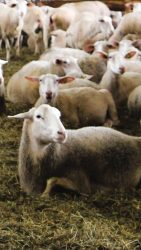
Managing Metabolic Challenges in Dairy Ewes During Lambing
The transition period can bring many challenges to ewes. The transition period is the weeks leading up to and after lambing. The ewe is transitioning from a non-lactating, pregnant state to a lactating, non-pregnant state. Metabolic challenges can arise in the last 3-6 weeks of gestation before lambing and last into early lactation. What is Ketosis? The term ketosis is derived from ketone bodies, produced when the body breaks down stored fat for energy, also known as lipid mobilization. In ewes, this occurs during increased energy requirements in late pregnancy and early lactation. A negative energy balance occurs when energy consumed does not meet the current physiological energy demand. In a less technical phrase, there needs to be more groceries…
Hoof Health in Small Ruminants
On August 17th and August 19th 2023, Ontario Goat hosted a hoof health clinic emphasizing the importance of hoof trimming and preventing hoof diseases in your goats. Featured speakers included Dr. Gosia Zoebel (New Zealand), Susan Schoenian (University of Maryland), Dr. Emily zur Linden (Metzger Veterinary), and Dr. Lauren Wilson (Cornwallis Veterinary Services). Inspired by the event, this blog post discusses the importance of hoof trimming and outlines hoof ailments that you may be concerned about in your sheep and goats. Hoof Trimming In intensive systems, like those in Ontario, animals are typically housed on soft surfaces that don’t allow for natural wearing of the hooves. Allowing hooves to overgrow and become deformed can cause permanent damage and increase susceptibility…
Transporting Livestock: Understanding a Transfer of Care Form vs. an Animal Transport Record
Whether you’re a commercial transporter or a producer transporting your own animals, it is important to keep records on the movement of animals to ensure that animals are being responsibly taken care of and humanely transported. You can do this by filling out a Transfer of Care form and an Animal Transport Record. But what’s the difference? Transfer of Care Form What is its purpose? The purpose of a Transfer of Care Form is to ensure that animals are not left at slaughter facilities, assembly centres, or auctions without evidence that the care has been transferred from the transporter to the receiver. This form only applies for animals that are delivered to slaughter, assembly, and auction facilities. After the recipient…