Improving Lamb Survival

Improving Lamb Survival

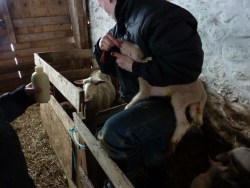
Improving lamb survival is an ongoing discussion.  At the June 2019 small ruminant veterinary conference in Guelph, a predominant theme was “Improving Lamb and Kid Survival”.  Lamb survival is often complex and farm specific but researchers from different parts of the world are working on issues and details that affect the survival of small ruminants that may provide ideas to improve lamb survival on your farm. Dr. Cathy Bauman, University of Guelph, talked about neonatal dairy small ruminant survival in intensive rearing conditions.  Two important areas she discussed were record keeping and early life infections. Record Keeping To solve a complex problem, it is critical to keep ongoing records.  Although it is difficult when many animals are being born at…
September 2020 Forage Report

September 2020 Forage Report

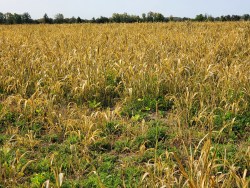
Photo: It is impossible to tell by looking at frost-damaged sorghum-sudangrass what the prussic acid levels may be. Silage Corn In fields where rootworm Bt hybrids have been used for three or more consecutive years, resistance among corn rootworm populations is suspected. Producers can no longer rely solely on Bt rootworm hybrids for protection against rootworm injury. See the 2020 Canadian Bt Corn Trait Table for more information on which traits are present in your hybrid. The best management practice to reduce the resistant rootworm population is to rotate out of corn for at least one year. Producers are encouraged to replace corn for a minimum of one year, but ideally for the next two to three years. To replace silage…

Sheep farming is a complex system – how are you making your decisions?

Sheep farming is a complex system – how are you making your decisions?

This article first appeared in Ontario Sheep News. How many decisions do you make each day? Hundreds?  Thousands? Regardless of how large or small your sheep operation is, farming is a complex system requiring many decisions.  Decision making is a skill you need to practice and improve.  For long term success, it is necessary to understand how you make decisions and to actively choose how farm decisions will be made.  Grain and Graze Australia has done research into farm decision making to help farmers make better decisions.  They believe that the only real difference between the top twenty percent of farmers and the rest is their ability to make the right decision at the right time. (Nicholson et al., 2015)…

August 2020 Forage Report

August 2020 Forage Report

Photo: Many winter wheat fields were planted to an annual forage crop after harvest this year. Premiums for summer-seeded New Forage Seeding insurance are due to Agricorp September 15. Silage corn growers should check fields for rootworm resistance to Bt hybrids Scouting for corn rootworm injury in silage fields is important to detect potential resistance to rootworm Bt traits and to plan management options for the next growing season. It is especially important to report any fields showing signs of suspected resistance to your corn agronomist and the provincial entomologist. High Risk Fields for Resistance to Occur Include: Scouting Guidelines to Determine Possible Rootworm Resistance are available on Field Crop News. Scouting should occur in early September, before silage harvest. Rotating out…

What is the workplace culture on your farm?

What is the workplace culture on your farm?

I recently read an article on farm labour shortage indicating that “the domestic labour pool is expected to drop largely due to an older-than-average workforce and few young entrants.”  I have also heard conversations like, young people don’t want to work, or they don’t know how to work.  Yet, I have also met some very motivated young people who are looking to start sheep farming and are finding the task of learning everything needed, financing an operation, etc. daunting.  This is not a new issue and is governed by a complex matrix of factors.  I would like to bring up one factor that I haven’t heard talked about often in the sheep industry and that is workplace culture. I know…

Managing Rams for a Successful Breeding Season

The ram is the most important member of the flock, yet he does not always get the attention he deserves. Good ram management can determine the success of your breeding program and ensure a profitable lamb crop. Sperm production in rams takes 49 days, therefore it is important to remember that you will not see the effects of any management changes for almost 7-8 weeks. You’ll want to ensure rams are well looked after in the two month period leading up to the breeding season as it will have a direct effect on the quality of sperm and fertility of the ram. Testicle size is a good indicator of a ram’s sperm producing ability, which can be assessed using scrotal circumference.…

Do you have a water contingency plan?

In 2016, many areas of the province saw very warm and dry conditions, and many wells were still dry leading into the winter. In other years, like the start to the 2017 growing season, the province experienced periods of excessive rain, leading to saturated soils and flooding. Both situations create many challenges for livestock and poultry farmers. No one can control the weather, but we can plan for it. The Ministry of Agriculture, Food and Rural Affairs (OMAFRA) encourages you to plan for future weather – conserving water and using it efficiently can help during low water conditions, and having effective drainage systems in place can help with saturated soil and runoff. Things to consider for low water conditions: Things…

Predation: Fencing and Resources

Fencing is one preventative measure available in trying to reduce predation to flocks. There are a few different fencing options available whether building a new fence or adding to an existing fence. A good fence can be utilized in conjunction with other predator prevention strategies (such as livestock guard animals, deterrents, etc).  It is important to note that no fence will completely eliminate predation from occurring. The OMAFRA Factsheet entitled: Fencing Options for Predator Control includes information on electric fences, net-wire fences, electric net fencing as well as a comparison of cost and life expectancy for the three types of fences. Some other resources include: Sheep Management Practices Can Influence Predation Program Guidelines: Ontario Wildlife Damage Compensation Program

Ideas for Shearing Facility Design and Shearing in Ontario

Wool production is a year-long process. Yet it is during harvesting – a process that takes a matter of minutes – that quality is often adversely affected. Preparing your facilities and flock properly for shearing will make the job much easier and ensure quality does not suffer. Producers often assume that the shearer knows the best procedure for wool handling and preparation. However, it is the producer’s responsibility to make sure that animal handling is optimized and ensure buyers get the high-quality wool they desire. A number of factors go into designing and constructing a shearing facility that is effective for both workers and sheep. Read more in the OMAFRA factsheet Shearing Facility Design and Shearing in Ontario.

New from OMAFRA Low Labour Feeding Systems and Bunk Design for Sheep

This Factsheet discusses winter feeding set-up for the sheep flock and why a feeding set-up with flexibility is important. Flexibility in a feeding system is critical because: -Feed is the single largest cost centre in the lamb production operation. Managing this cost requires that the system has flexibility in accommodating various ingredients for cost-effective rations.-Infrastructure is a major long-term expenditure that is often larger than livestock investment and may approach land costs. Infrastructure that serves as an investment or asset should be adaptable to multiple uses, otherwise it becomes an expense that requires further investment (renovation expenses) to remain current.-Labour is another major cost on sheep operations. The need for labour varies by animal group, time of year and rations…