Pregnancy Scanning: Management Tips

Pregnancy Scanning: Management Tips

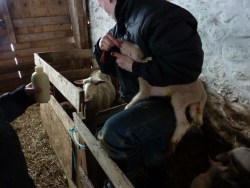
This blog post was adapted from the OMAFRA Factsheet “Pregnancy Scanning: Management Tips” (AGDEX 433/22) by A. O’Brien. Introduction Pregnancy scanning, using real-time ultrasound equipment, is a useful management tool for Ontario sheep and goat producers. When scanning is performed within the recommended time frame by trained professionals, accuracy of identifying animals that are not pregnant and counting the number of fetuses is high. Pregnancy scanning can be used to assign open ewes to new breeding groups, make culling decisions, and optimize feeding management based on expected litter size. Benefits of Ultrasound Scanning Factors Affecting Ultrasound Scanning Accuracy For producers to get the maximum benefit from pregnancy scanning, factors affecting accuracy need to be well understood. Some of the factors…

Grazing Livestock and Forage Palatability: How They Go Hand in Hand

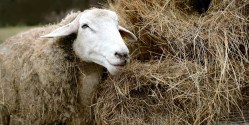
This article was written by Breann Saulnier, OMAFRA Grazing Livestock Assistant. You may look out into a pasture and see an abundance of tall, delicious-looking grass for livestock to graze but this is not necessarily what the livestock see. The amount of forage available for grazing is the portion of plant material that the animal chooses to eat, not the total amount of forage growing that is visible. So how do you know what the animal will choose to eat? Well, the palatability and the utilization of forage for animals is influenced by what stage of growth the grass is in. In the context of grazing, palatability refers to a measure of when animals are given free choice, choose to…

From the Backside to the Countryside – Manure Odours

From the Backside to the Countryside – Manure Odours

This article was written by Christine Brown, OMAFRA Field Crops Sustainability Specialist. It was originally posted on FieldCropNews.com. There is no surer sign of spring in the countryside than the evidence from our noses of manure application in full swing. Odour complaints occur every year, especially where urban settlements border livestock farms. Although manure odour is inconvenient, most farms do consider wind direction and make an effort to apply and incorporate manure as quickly as possible to minimize odours. Some farms are also looking at manure additives to help control odours. The combination of livestock species, feed ration and manure storages result in hundreds of complex compounds that can produce odorous gases. Some of these gases are dangerous, while others…

Make Better Use of Your Feed; Sampling is What You Need! Part 1: Taking a Proper Feed Sample

Make Better Use of Your Feed; Sampling is What You Need! Part 1: Taking a Proper Feed Sample

Learn about proper procedures for collecting feed samples.

Moisture Content and the Hay Drying Curve

Moisture Content and the Hay Drying Curve

Many management decisions affect hay quality. After deciding when to cut, the next big decision is about the moisture content. Accurately timing how long to let the crop wilt when harvesting a forage crop will help ensure that it stores well. It either needs to have enough moisture to ferment correctly (silage/haylage or baleage systems), or low enough moisture content to preserve as dry hay. There are three types of moisture to consider when wilting a forage crop: stem moisture, dew moisture, and air humidity. Stem moisture is the amount of water within the plant. Dew moisture is water outside the plant, whether it is from rain or condensation (dew). Air humidity affects how quickly the crop can dry. If…

Pest Alert: Alfalfa weevil and leafhopper numbers high

Pest Alert: Alfalfa weevil and leafhopper numbers high

This article was written by Tracey Baute, OMAFRA Field Crops Entomologist and originally posted on FieldCropNews.com Alfalfa weevil and potato leafhopper (PLH) are being reported as extremely high in many fields.  Hot dry conditions have made it more favourable for these pests than their natural enemies (especially entomopathogenic fungi). Scout fields to determine if cutting is possible or if an insecticide application is necessary if thresholds are reached. Consider fields at threshold if both pests are present but populations are slightly below threshold for either pest. Monitoring recently cut fields is extremely important as well, as infestations can overwhelm the young regrowth. Dry bean growers should also keep watch of their newly emerging dry bean plants for PLH as seed…

CAP Special Provisions and Farmer Mental Health Resources

Article: Owning a farm is much more than a business; it is a way of life.  As with most businesses, there are some very stressful times that can weigh you down. During busy seasons or critical production periods, it is normal to be faced with time constraints and pressures and facing major financial issues can multiply these pressures many times.  During these times, and with the added reality of COVID-19, these demands can put anyone involved in the business of agriculture under a great deal of stress, often impacting one’s mental health. The Ministry of Agriculture, Food and Rural Affairs (OMAFRA) cares about the well-being of farmers and farm families and recognizes the unique challenges that can lead to mental…

Improving Lamb Survival

Improving Lamb Survival

Improving lamb survival is an ongoing discussion.  At the June 2019 small ruminant veterinary conference in Guelph, a predominant theme was “Improving Lamb and Kid Survival”.  Lamb survival is often complex and farm specific but researchers from different parts of the world are working on issues and details that affect the survival of small ruminants that may provide ideas to improve lamb survival on your farm. Dr. Cathy Bauman, University of Guelph, talked about neonatal dairy small ruminant survival in intensive rearing conditions.  Two important areas she discussed were record keeping and early life infections. Record Keeping To solve a complex problem, it is critical to keep ongoing records.  Although it is difficult when many animals are being born at…

September 2020 Forage Report

September 2020 Forage Report

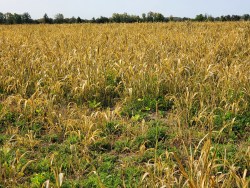
Photo: It is impossible to tell by looking at frost-damaged sorghum-sudangrass what the prussic acid levels may be. Silage Corn In fields where rootworm Bt hybrids have been used for three or more consecutive years, resistance among corn rootworm populations is suspected. Producers can no longer rely solely on Bt rootworm hybrids for protection against rootworm injury. See the 2020 Canadian Bt Corn Trait Table for more information on which traits are present in your hybrid. The best management practice to reduce the resistant rootworm population is to rotate out of corn for at least one year. Producers are encouraged to replace corn for a minimum of one year, but ideally for the next two to three years. To replace silage…

Sheep farming is a complex system – how are you making your decisions?

Sheep farming is a complex system – how are you making your decisions?

This article first appeared in Ontario Sheep News. How many decisions do you make each day? Hundreds?  Thousands? Regardless of how large or small your sheep operation is, farming is a complex system requiring many decisions.  Decision making is a skill you need to practice and improve.  For long term success, it is necessary to understand how you make decisions and to actively choose how farm decisions will be made.  Grain and Graze Australia has done research into farm decision making to help farmers make better decisions.  They believe that the only real difference between the top twenty percent of farmers and the rest is their ability to make the right decision at the right time. (Nicholson et al., 2015)…