Establishing Alternative Forage Crops

Establishing Alternative Forage Crops

Reports indicate widespread alfalfa winterkill due to several thaws that reduced snow cover and created ice cover in fields. Producers need to scout their hay fields to assess the damage, then develop a plan to ensure they will have the forage they need. Keep it, patch it, or start over? Plant counts should be done in the spring and fall each year (Table 1). These can be done when the alfalfa is dormant. The spring count is a good time to dig up some plants and assess root health. Stem counts are useful for predicting yield potential, and these should be done when there is 15-20 cm (6-8 in.) of growth (Table 2). If the number of plants or stems…
Forage Report – April 2019

Forage Report – April 2019

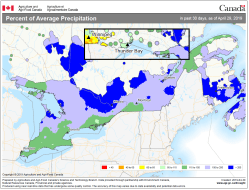
According to Agriculture and Agrifood Canada, April 2019 brought above-average precipitation to most of the province. Southwestern Despite several thaws, forages seem to have overwintered better than expected in most of the region. See Check Alfalfa Stands This Spring and Make a Plan for scouting information. There are some reports of alfalfa heaving. The freeze/thaw cycles can “jack” the plants out of the ground, drying out crowns or breaking taproots. Heaving is most likely to occur on heavy soils. Red clover acres may be down this year. Those still planning to plant clover into wheat should consider single-cut (or “mammoth”) varieties, as they are slower growing and therefore less aggressive than double-cut varieties. Central and Eastern Estimates suggest 60-80% of…

Timing Spring Turn-out

Timing Spring Turn-out

Spring is in the air, and ewes and farmers alike are eager to start the grazing season. Timing that delightful move is critical, as spring grazing management sets up both yield potential of the pasture and the quality of the available forage. How early is too early? Livestock should go out on pasture when grasses have fully developed three to four new leaves. Turning out earlier than this is very stressful on the plants. Perennial forages rely on carbohydrates stored in their root systems to fuel regrowth when they break dormancy (Figure 1). The plants do not refill those carbohydrate stores until they have enough leaf area to produce more sugar than they need to grow. By waiting until grasses…

Ontario Forage Review 2018

Ontario Forage Review 2018

Fall and Winter Conditions Rain delays in 2017 pushed harvest in some areas into the critical fall harvest period. Root reserves that contribute to winter hardiness and promote spring growth were reduced. Many fields across the province were harvested when soils were still wet from frequent rainfall. Soil compaction in forage fields was a silent yield thief in 2018; research has shown compaction can reduce yields between 6-75% in grass stands. Winter conditions were equally challenging: across the province, several freeze-thaw cycles occurred between January and April. While agronomists report most of the province experienced less alfalfa winter-kill than expected, northeastern Ontario had severe winter-kill in alfalfa and grasses. Winter injury was most common in low-lying areas, heavy-textured soils, and…

Managing Forages under Dry Conditions

Managing Forages under Dry Conditions

Dry summer conditions in some parts of the province have farmers thinking about available forage. There are several things that can be done to help ensure you have enough feed until next spring. Take inventory Knowing the amount of forage needed to get through the year is the first step to ensuring your farm has enough. Sheep eat approximately 2% of their bodyweight in forage dry matter every day. To calculate daily flock demand, use the following calculation for each class of livestock on the farm: Daily forage DMI = average bodyweight x number of animals x 0.02 Add up the answers for each class for total daily dry matter intake (DMI). Multiply this by the number of days’ feed…

Correctly Grounding an Electric Fence

Key points: Improper grounding is the most common reason for electric fence malfunctions Install 90 cm (3’) of ground rod for every joule of output from the energizer Ground rods should be more than 3 m (10’) from each other Ground rods should be more than 23 m (75’) from other grounds, waterlines, or utilities. Ontario One Call can help you locate publicly-owned infrastructure: 1-800-400-2255 or on1call.com. A private locator can be hired to find other buried infrastructure. Improper grounding is the most common mistake that causes an electric fence to malfunction. Understanding electricity and all the jargon that goes with it can be a challenge. Luckily, thinking about water is often a great way to imagine electricity, so I’m…

Selecting an Energizer for Your Electric Fence

Key points: The most economical power source (hydro, batteries, or solar) depends on ease of access to fencer Output voltage needs to be high enough to get the attention of the livestock being contained Output joules rating must be capable of delivering the voltage along the length of wire in the fence When in doubt, buy bigger than you need The energizer (also called a fencer) is the cornerstone of any electric fence. Selecting the right one for your farm is crucial to making an electric fence work for you. Understanding electricity and all the jargon that goes with it can be a challenge. Luckily, thinking about water is often a great way to imagine electricity, so I’m going to draw…

Is the Production Insurance Forage Rainfall Program right for you?

The Production Insurance Forage Rainfall Program may be a good fit for you. The forage rainfall plan uses rainfall as an indicator of quantity and quality of forage.  There are two coverage options available: •Insufficient rainfall •Excess rainfall  Insufficient Rainfall The insufficient rainfall option protects against insufficient rainfall only. If the measured rainfall at the station you choose during the insured period is less than 85 per cent of the long-term average rainfall for your area, a claim may be paid.  The producer can chose the rainfall collection station data to use. Excess Rainfall The excess rainfall option provides protection against excess rainfall during the chosen harvest period.  The producer selects a rainfall threshold of 5 mm or 7 mm. If you…

Time to Think About Pasture Management

As things start to green up, its a good time to think about your pasture.  OMAFRA’s Publication 19 Pasture Production has information on improving pastures, including species selection, fertility, rejuvenation and renovation, weed control, grazing systems, fencing and watering. It also provides insight into animal pasture management, budgeting, and managing different types of livestock on pasture. Available on line. 

Utilizing Moisture Stressed Corn as Feed

This post was written by Thomas Ferguson, Forage and Grazier Specialist, OMAFRA.  It was originally posted on Field Crop News August 18, 2016. With the dry weather this year and low forage yields across much of the province, many producers are looking for alternative forages. There is a lot of stressed corn that could be utilized as forage for livestock.  The amount of moisture stress that the corn has been through can affect the quality of the silage and there can be great variability between fields and even within a field.  In fields that were dry during tasseling or pollination and have reduced grain fill, the energy content of the silage will be reduced but forage quality should remain constant. …