

This article was written by Juliet Germann (PhD Candidate, University of Guelph). This article was originally published in the Spring 2026 issue of the Dairy Goat Digest.
What’s being done?
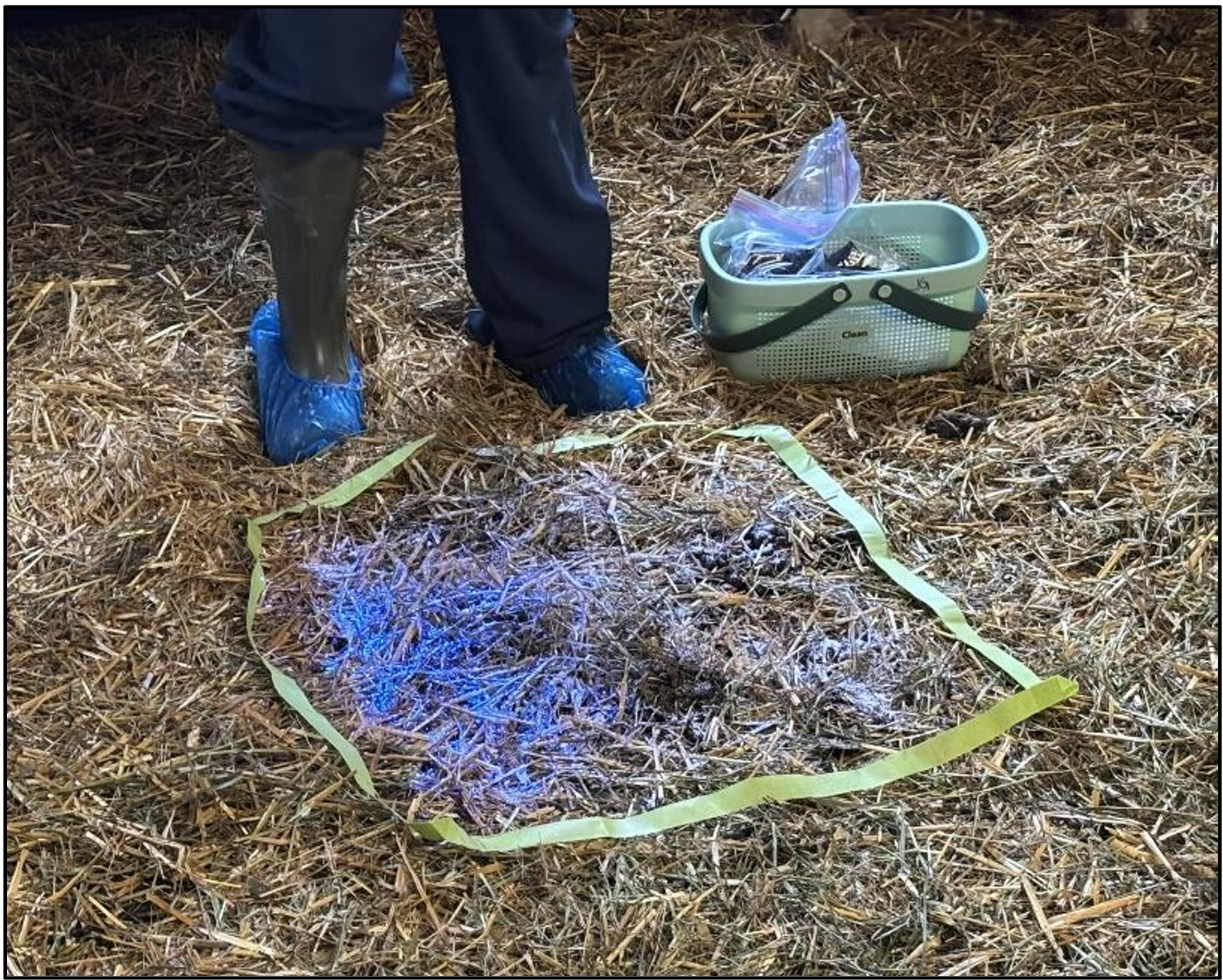
This study is using a product called Glo Germ to simulate the spread of infectious fluid during abortion events on three different types of goat farms: meat, fibre, and hobby operations. Glo Germ is a powder that becomes visible under ultraviolet (UV) light and is commonly used to demonstrate cross contamination. In this study, it is being used as a proxy for environmental contamination.
Glo Germ is applied to a defined area at the centre of a goat pen to represent a contamination event. The spread of the Glo Germ is then assessed over a two day period using UV light.

What has been found?
Although the project is still ongoing, preliminary findings suggest that reduced movement in and out of goat pens means less Glo Germ spread. This includes both human movement, such as people entering pens, and animal movement, such as goats being moved between pens.
By the second day, Glo Germ becomes increasingly widespread within the bedding, which expands the area of potential exposure and transmission. Other factors also appear to influence spread, including bedding depth and goat behaviour, such as movement patterns and interacting with the contaminated bedding.
What does this mean?
These findings suggest that the spread of Glo Germ depends on movement in and out of the pen, which confirms what we know about movement as a risk factor for disease spread. Limiting movement into contaminated pens may help to reduce transmission, particularly because footwear can exacerbate spread between pens.
Although this study only follows spread over a two-day period, infectious diseases on farms can persist and spread over much longer timeframes. This highlights the importance of biosecurity practices. For example, avoiding unnecessary entry into pens used for quarantine or isolation can help prevent pathogens from being carried to other animals. Simple measures, such as dedicated footwear or using boot baths, may play an important role in reducing disease transmission on goat farms.

