


In preparation for kidding, setting up bonding pens (also referred to as claiming pens or kidding pens) a few weeks in advance is often a good idea so when does start to kid you are prepared and can focus on kidding and daily chores, instead of building pens. Claiming pens assist the doe in establishing a strong maternal bond with her kid(s).
A good layout is essential; this starts with planning and having a designated area which can be easily set up at kidding time. Plan your area in a well-ventilated, draft-free section of the barn which is warm if kidding in the winter months. Bonding pens should be set up close to the main kidding pen so does with kids do not have to be moved far away. When setting up bonding pens, consider making use of laneways in order to easily move the doe and her kids to the bonding pen. A laneway also allows for easy access into the pens and makes feeding time simpler.
Having does pregnancy scanned is a good idea so you know how many are pregnant in the group and can plan accordingly. Typically, one claiming pen for every five to ten does kidding is a good rule of thumb. This will depend on prolificacy of the does in the group, age and the size of the group kidding.
The bonding pen should be 1.5 metres by 1.5 metres (5 feet by 5 feet) according to the Manitoba Goat Association. However, if you are planning on separating does early and have them kid in a kidding pen, a larger area may be needed. The Meat Goat Producer’s Manual published by the Canadian Meat Goat Association recommends a kidding pen that is 1.8 metres by 2.4 metres (6 feet by 8 feet). Building instructions for a portable claiming pen is available from the Canada Plan Service. The full factsheet can be found at Bonding Pen Building Instructions. The factsheet is for sheep, however the concept is similar. Two different layouts as well as a sample pen are included in the diagram below from the Canada Plan Service.

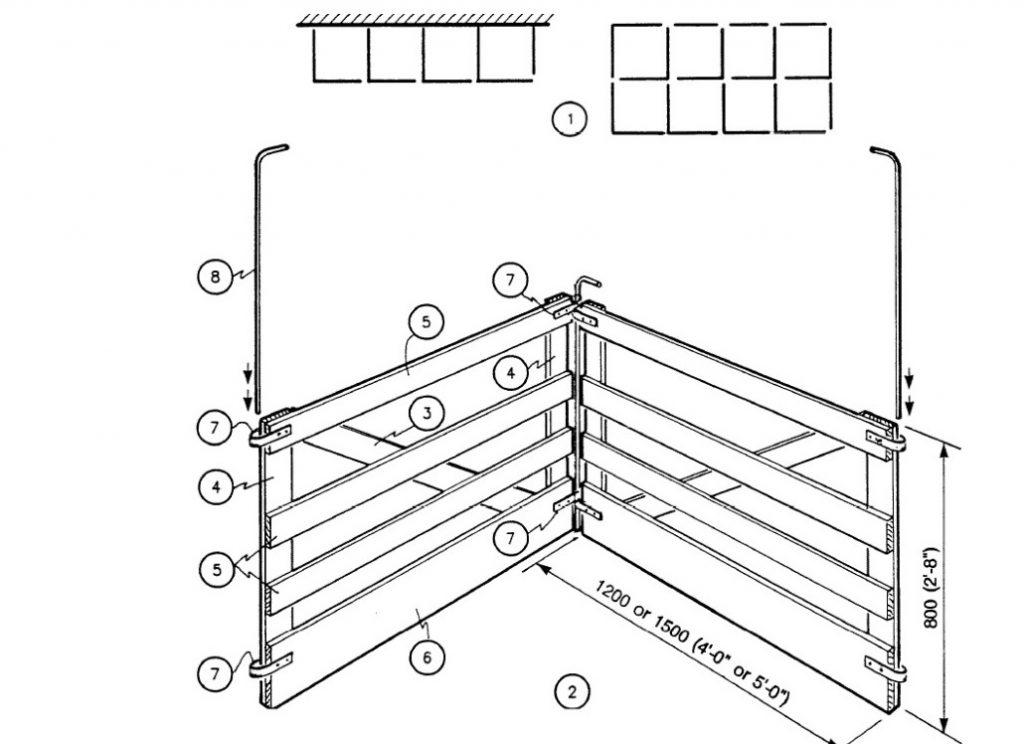
Claiming pens should be designed to be durable. Ideally, the pens should be easy to pressure wash and disinfect after each group to minimize potential disease spread. Pens should not allow kid escape, or kids to get stuck or caught. Commercially available claiming pens can also be sourced from places such as goat supply companies, local co-ops, feed suppliers or welders.
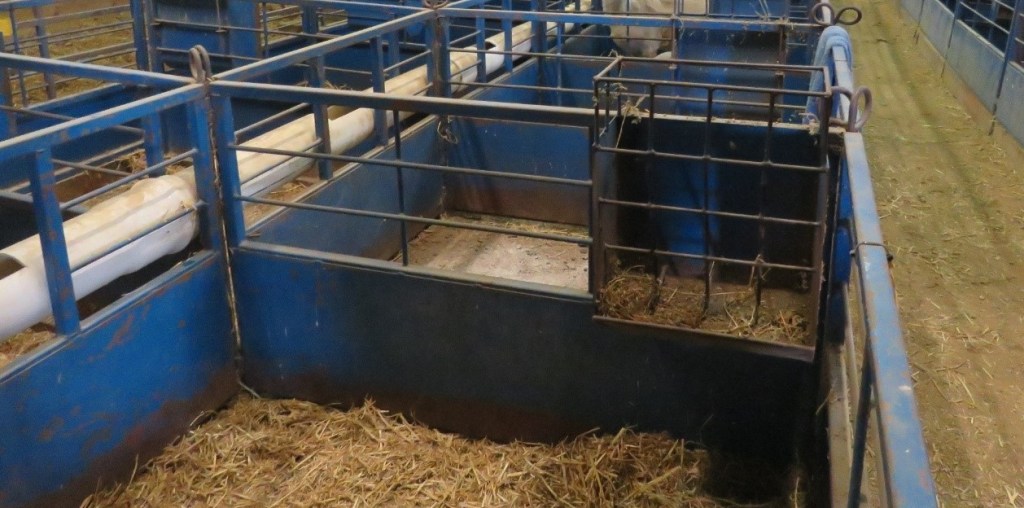
In order to minimize labour, make use of innovative feeding solutions in bonding pens. Using a central water system will cut down on the number of buckets you carry (and have to empty when dirty)! For example, a white sewer pipe which is placed at the back of the pens can be installed. Notches can be cut at every pen and a recirculating pump with a hose can be used to circulate the water.
Having hay racks which can feed one or multiple pens are often labour saving solutions since there is less waste and multiple does can be fed at once. Other ideas may include being able to feed from the outside of the pen, in the alleyway. This may be a problem if kids can get through the spacing and get out of the pen.

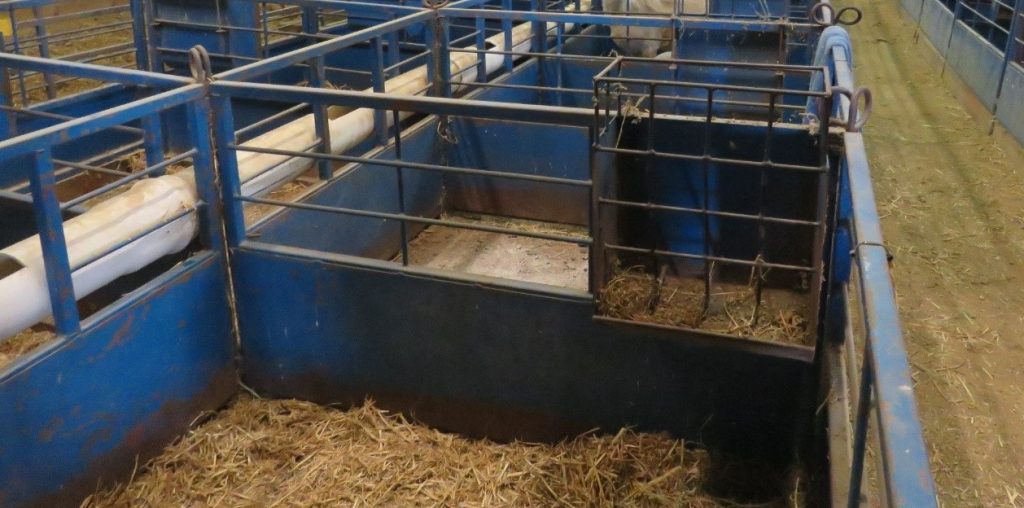
Clean, dry, draft-free, well bedded pens are ideal for the doe and her kids. Protocols should be in place after the doe and her kid are moved including removal of soiled bedding and thorough disinfection. New bedding should be added before another doe and her kid is moved into the pen.
In summary, it is important to have bonding pens set up in advance of kidding. The pens will assist in establishing a maternal bond between the doe and her kids. When the doe and her kids are moved to a larger group mis-mothering should not occur. Ensure you have room to expand if more bonding pens are needed. Pens should be well ventilated, draft free, well bedded and cleaned frequently. Consider labour efficient water and feeding solutions for your operation to reduce the amount of time and labour spent on feeding and watering in order to give you more time monitoring kidding does.
Sources:
Best Management Practices for Commercial Goat Production Manual, Ontario Goat, 2014.
Portable Claiming Pen. M-4831. Canada Plan Service. 2010. http://csbe-scgab.ca/publications/canada-plan-service-archive
Kidding Management. Manitoba Goat Association. M. Rashid https://www.gov.mb.ca/agriculture/livestock/production/goat/pubs/kidding-management.pdf
Meat Goat Producer’s Manual, Canadian Meat Goat Association. https://canadianmeatgoat.com/article/783